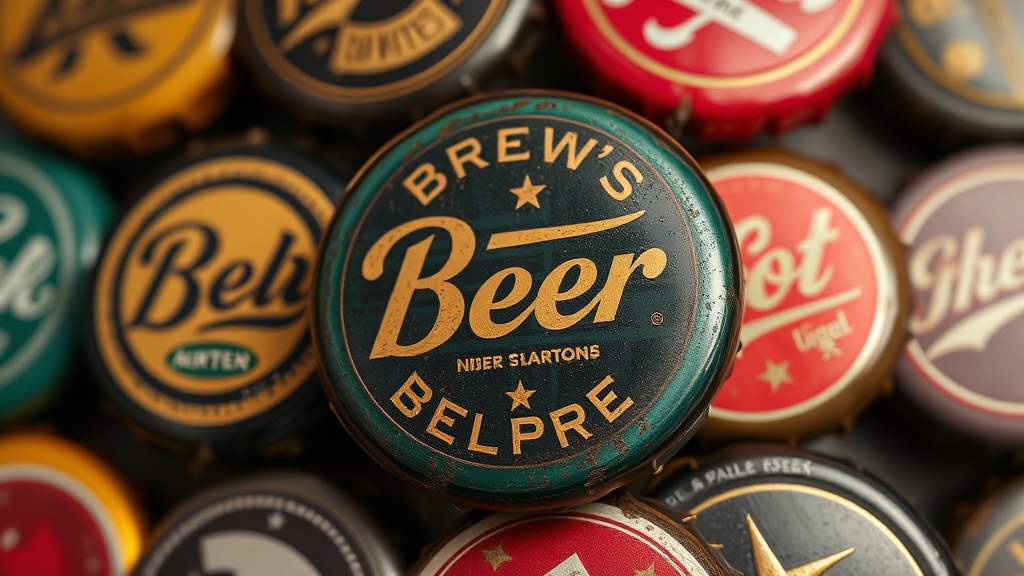
Rare Metal Finishes Found on Vintage Breweries Caps

Patinated Copper Finishes
Brushed Aluminum Textures
Gold-Leaf Embellishments
Oxidized Iron Effects
You’re flipping through a bin at a local estate sale and spot a dull, brownish-red cap that looks like standard rusted steel. But as you tilt it toward the light, a flash of iridescent violet or a deep, metallic gold catches your eye. This isn't just a weathered lid; it's a specific metal finish used by a brewery decades ago to denote a premium lager or a limited release. This post covers the most distinctive metal finishes found on vintage beer caps—including brass, copper, silver, and gold-toned coatings—and why these finishes matter for your collection's value and identification.
Collectors often mistake oxidized steel for intentional finishes. They aren't the same thing. A true metallic finish is a deliberate part of the manufacturing process, often used to signify a "special edition" or a high-end brand identity. Understanding the difference between a patina and a designed finish is what separates a casual hobbyist from a serious collector.
What Are the Most Common Vintage Metal Finishes?
The most common vintage metal finishes found on beer caps are silver, gold, copper, and brass coatings. While modern caps are almost exclusively standard tin-plated steel, mid-century breweries frequently experimented with different aesthetic looks to stand out on a bar top. These finishes weren't just about looks—they were often used to signal a higher grade of beer to the consumer.
Silver-toned finishes are the most prevalent, but they aren't all created equal. You'll see everything from bright, high-shine chrome-style finishes to more muted, matte silver. These were the workhorses of the industry. If you find a silver cap with a heavy, textured feel, it might be a high-quality tin-plated steel designed for durability during long-distance shipping.
Gold and brass finishes are much rarer. These were often reserved for "celebration" brews or anniversary editions. When you see a deep, yellowish-gold hue, it's usually a thin layer of brass or a gold-colored lacquer over a steel base. These are highly sought after because they stand out immediately in a display case of standard red and white caps.
Copper finishes offer a warm, reddish-brown metallic sheen that is incredibly distinct. Unlike rust (which is an unwanted oxidation), a true copper finish has a consistent, reflective quality. These were popular in the early 20th century for certain European imports. If the "rust" looks perfectly uniform across the entire surface, you're likely looking at a copper-coated cap rather than a damaged one.
| Finish Type | Visual Characteristic | Rarity Level | Common Use Case |
|---|---|---|---|
| Chrome/Silver | Bright, reflective, cool tones | Low (Common) | Standard lager or pilsner |
| Gold/Brass | Yellow/Deep gold, high shine | High (Rare) | Anniversary or Premium brands |
| Copper | Reddish-orange, warm metallic | Medium | European imports/Specialty ales |
| Bronze | Dark, brownish-gold, matte | High | Limited editions/Crafted styles |
How Do You Distinguish Real Metal Finishes From Rust?
You can distinguish real metal finishes from rust by checking for uniformity, reflectivity, and surface texture. A true metallic finish will have a consistent color across the entire cap, whereas rust is almost always irregular, flaky, and localized in spots where moisture has penetrated the metal.
Grab a magnifying glass (or use the macro lens on your phone). Look at the edges of the color. If the "metallic" look stops abruptly at a certain point or looks like a crusty layer, it's rust. If the color is perfectly smooth and follows the contour of the crimped edges, it's a designed finish. A real copper or gold finish will still have a certain level of "glow" even if it's slightly aged. Rust, on the other hand, looks dead and matte.
Another trick is the weight and sound. While subtle, a heavy-duty copper-coated cap might feel slightly more substantial than a cheap, thin-plated steel cap. If you tap it (gently!) against a hard surface, a high-quality metallic coating often produces a sharper, more resonant "ping" than a rusted, structurally compromised cap. (Don't actually bang your caps around, though—we want them to stay in mint condition.)
Check the underside of the cap too. A true metallic finish is often applied to the top side only, leaving the underside as standard steel. If the entire cap—top and bottom—has a uniform, non-oxidized look, it might be a specialized alloy. For more technical details on metal oxidation and how it affects different types of steel, you can check out the National Institute of Standards and Technology (NIST) resources on material science.
It's also worth noting that some "gold" caps are actually just yellow paint. This is a common heartbreak for collectors. Real metallic finishes have a depth that paint lacks. Paint looks "flat" and can crack or peel in large flakes. A metallic plating, even an old one, tends to wear down more gracefully.
Identifying High-Value Metallic Caps
High-value metallic caps are usually identified by their rarity, the prestige of the brewery, and the specific era they represent. If you find a cap with a brass finish from a defunct brewery like the original Pabst Brewing Company or a local regional powerhouse, the value jumps significantly compared to a standard silver-toned cap.
- The "Anniversary" Rule: Any cap that uses a gold or bronze finish to celebrate a 50th or 100th anniversary is a high-tier collectible.
- The Material Factor: True brass or copper-coated caps are harder to find because the production costs were higher.
- Condition is Everything: A gold-toned cap with heavy chipping is worth much less than a standard silver cap in pristine condition.
The market for these items is driven by the "eye appeal." In a display case, a collection of only red and white caps looks a bit flat. Adding a few gold, copper, and bronze pieces provides the visual "pop" that makes a collection look professional. This is why collectors are willing to pay a premium for these specific finishes.
Why Do Vintage Breweries Use Different Metal Finishes?
Breweries used different metal finishes primarily for brand differentiation and to signal product quality to the consumer. In an era before massive digital advertising, the physical appearance of the product—including the cap—was a vital part of the branding strategy.
A gold-colored cap told the customer, "This is the good stuff." It was a visual shorthand for luxury. This was especially true during the mid-20th century when many breweries were moving toward more sophisticated packaging. If a consumer saw a gold-capped bottle on a shelf, they subconsciously associated it with a higher price point and a better taste profile.
There's also a practical side to this. Different finishes can offer varying levels of resistance to certain types of environmental wear, though this was often secondary to the aesthetic goal. A copper or brass finish might have offered a slightly different way to combat the corrosion issues common in damp cellar environments. However, most of the time, it was purely about the "wow" factor at the point of sale.
The catch? Some of these finishes were incredibly expensive to produce. This is why you don't see them on every single beer. They were strategic tools used to create a sense of exclusivity. If you're looking through old inventory, don't overlook the "plain" looking dark-colored caps—they might actually be a bronze or deep copper finish that has just aged heavily.
When you're out hunting, keep a small microfiber cloth in your pocket. If you see a cap that looks interesting, a very light wipe can help you determine if you're looking at a dulling patina or a genuine metallic finish. Just be careful—you don't want to scratch a delicate vintage surface. Most collectors prefer to leave the aging as-is, as a "natural" patina can actually add to the vintage charm of a piece.
Keep an eye out for the heavy hitters: the brass-toned imports from Europe and the gold-toned anniversary caps from American giants. These are the pieces that will truly define your collection.