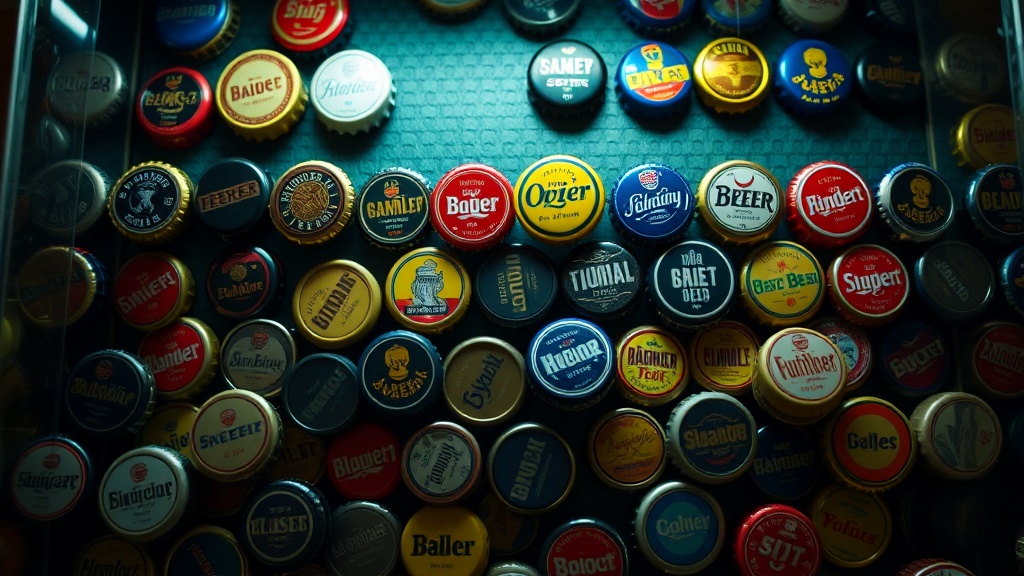
How to Properly Store and Display Your Beer Cap Collection

What This Guide Covers (And Why Your Caps Deserve Better)
Beer cap storage isn't just about keeping clutter off the floor. Done right, it preserves the value, color, and condition of a collection that might span years — or decades. This guide walks through everything from humidity control to display framing, with specific product recommendations and methods that actually work. Whether you've got fifty caps or five thousand, the techniques here will keep them safe and looking sharp.
What's the Best Way to Store Beer Caps Long-Term?
The best long-term storage method keeps caps dry, protected from light, and physically separated to prevent scratching or corrosion. Most serious collectors use acid-free archival materials in rigid containers, not shoeboxes or plastic bags.
Here's the thing — beer caps are surprisingly fragile. That colorful paint? It fades under UV exposure. The metal underneath? It corrodes in humid environments. A cap stored improperly for five years can look worse than one stored well for fifty.
For bulk storage, Gaylord Archival's document cases work exceptionally well. They're acid-free, lignin-free, and come in sizes that fit standard trading card boxes perfectly. Line them with unbuffered archival tissue — buffered tissue (the kind with calcium carbonate) can react poorly with metal over time.
Humidity control matters more than most people realize. Aim for 45-55% relative humidity. Higher, and you risk corrosion. Lower, and certain paints can become brittle. Silica gel packets help, but you'll want something rechargeable. The Dry-Packs 750 Gram Silica Gel Canister ($15-20) changes color when saturated and can be dried in an oven. Worth noting — toss the cheap packets that come with electronics. They're single-use garbage.
Containers Compared: What Actually Works
| Storage Method | Best For | Pros | Cons |
|---|---|---|---|
| Acid-free photo boxes | Small collections (under 500) | Cheap, stackable, easy to label | Limited capacity, no humidity control |
| Glass jars with gaskets | Display + storage hybrid | Visible contents, airtight seal | Heavy, risk of breakage, light exposure |
| Cardboard trading card boxes with dividers | Medium collections (500-2000) | Affordable, expandable, organized | Not fully archival, needs inner protection |
| Plastic parts cabinets (Akro-Mils) | Large sorted collections | Durable, drawers protect from dust | Static electricity risk, check for PVC |
| Bank safe deposit boxes | High-value vintage caps | Secure, climate-controlled | Expensive, inconvenient access |
The catch? Most "archival" products sold on Amazon aren't actually archival. Look for PAT (Photographic Activity Test) certification — it's the gold standard for materials that won't damage your collection over time. The Northeast Document Conservation Center maintains excellent resources on what these certifications actually mean.
How Should You Display Beer Caps Without Damaging Them?
Display methods that work without damage use indirect mounting — caps sit in recesses, behind glass, or on surfaces that don't require adhesive contact with the cap face. Never glue caps directly to a backing board. That destroys value and often damages the finish.
Shadow boxes remain the most popular option for good reason. MCS Industries makes reliable 12x12 and 16x20 shadow boxes with adequate depth (1.5+ inches) for standard crown caps. You'll find them at Michaels, Jo-Ann, and Amazon — usually $15-30 depending on size. The interior is typically felt or linen, which works fine for display. For long-term storage inside a shadow box? Line it with acid-free mat board first.
Magnetic display sheets offer another approach. Collectors' Display sells flexible magnetic sheets with shallow depressions that hold caps securely without adhesive. The magnets are weak enough that they won't damage the cap, strong enough to keep them from sliding. A standard sheet holds 42 caps and runs about $12.
That said, magnetic sheets have limitations. They're not ideal for caps with heavy corrosion or loose cork liners — the magnetic field can accelerate oxidation in already-compromised metal. They're also terrible for caps you plan to grade someday. Professional grading services like PCGS (which now handles certain bottle cap categories) typically won't accept magnetically stored items.
DIY Display Options That Don't Destroy Value
Some collectors build custom displays — and done well, these look incredible. The key is creating a mounting system that supports the cap without adhesive.
One proven method: Drill shallow holes (slightly smaller than cap diameter) into a wood backing, then paint the backing matte black. Caps press into the holes and stay put through friction. No glue, no magnets, no damage. Use Baltic birch plywood — it's stable and won't warp. Avoid MDF; it holds moisture like a sponge.
Another approach uses cork tiles (the real stuff, not the synthetic garbage). Push pins through the cap's center hole anchor them securely. The cork compresses slightly, gripping the cap without marring the face. This works beautifully for rotating displays — what you're showing this month stays pinned, the rest stays stored.
What Environmental Conditions Damage Beer Caps Most?
Humidity and UV light cause the most damage to beer cap collections, followed by temperature fluctuations and air pollution. Cap paint fades in sunlight. Metal corrodes in damp basements. Cork liners rot when humidity stays above 70%.
Light damage is irreversible. That vibrant red from a 1960s Schlitz cap? Gone forever once UV breaks down the pigments. Even indoor lighting causes gradual fading. Fluorescent tubes are particularly bad — they emit more UV than incandescents. LED lighting is safest, especially warm white (2700K-3000K) with a CRI above 90.
If you're displaying caps in a room with windows, apply UV-filtering film to the glass. 3M's Prestige series blocks 99% of UV while remaining virtually invisible. It costs more than cheap tint ($8-15 per square foot installed), but it works. Alternatively, rotate displays seasonally — four months on the wall, eight months in storage.
Temperature swings cause their own problems. Metal expands and contracts. Paint doesn't always move at the same rate. Over years, this causes cracking and flaking. Keep displayed caps in rooms that stay between 65-75°F year-round. Avoid attics, garages, and exterior walls in older homes.
The Basement Problem
Basements seem logical for storage — cool, dark, out of the way. They're also humidity nightmares. Concrete walls wick moisture. Summer humidity spikes destroy collections before owners notice.
If you must use a basement, invest in a dehumidifier that maintains set humidity levels (not just "on/off"). The Frigidaire FFAD5033W1 ($250-300) handles medium basements reliably and includes a pump for continuous drainage. Pair it with a digital hygrometer — SensorPush units ($50) connect to phones and log historical data so you spot trends before they become disasters.
How Do You Organize a Large Beer Cap Collection?
Large collections (1,000+ caps) need systems that scale. Most collectors organize by category first: country, brewery, style, or era. Then they subdivide. A collection organized by country might break down by region, then by brewery alphabetically.
Physical organization follows the same logic. Use dividers — acid-free cardstock works, or archival-quality index tabs. Label everything. P-Touch laminated labels resist fading and moisture better than Sharpie on masking tape (which eventually bleeds through and marks caps).
Software helps too. Colnect (free) and Collectr (subscription) both support bottle cap catalogs. Colnect has better community data — members have cataloged tens of thousands of cap variants. Collectr offers better photography tools. Both export to CSV for backup.
Here's a system that works for collections between 500-5,000 caps:
- Sort by major category (country, decade, or style — pick one and stick with it)
- Subdivide into 100-cap batches — the maximum that fits comfortably in a standard trading card box
- Photograph each batch before storage — insurance documentation and reference
- Assign inventory numbers — USA-001, USA-002, etc. Write on the box, not the cap
- Store reference materials together — brewery histories, price guides, provenance notes
The "one touch" rule applies: every time you handle a cap, you risk damage. Organize once correctly rather than reorganizing annually. When you do handle caps, wear nitrile gloves — cotton gloves absorb oils and transfer them to metal. Powder-free nitrile only.
Handling Rare or Valuable Specimens
Pre-1960 caps, prototype designs, and limited brewery releases warrant special treatment. Store these individually in 2x2 coin flips (Mylar, not vinyl) or SAFLIP holders. The 2x2 format fits standard crown caps perfectly and fits into 3-ring binders for easy reference.
For extremely valuable pieces — pre-Prohibition caps, wartime designs, brewery errors — consider airtight capsules. These are essentially small plastic cylinders with gasket seals, similar to coin capsules but sized for bottle caps. They run $1-3 each, so they're impractical for bulk storage. But for a cap worth $200+, the protection is worth the cost.
Common Storage Mistakes That Ruin Collections
Even experienced collectors make errors. The worst offenders:
- Rubber bands — They degrade, stick to caps, and leave permanent stains. Never use them.
- Plastic bags without ventilation — Trap humidity, accelerate corrosion. If you must bag, use breathable polyethylene with desiccant.
- Attic storage — Temperature swings from 40°F to 140°F destroy paint adhesion. Don't do it.
- Cleaning with chemicals — Brasso, vinegar, and CLR remove patina and often damage paint. A soft brush removes loose dirt; anything else is permanent alteration.
- Stacking caps nested together — The metal edges scratch face paint. Store face-up, not nested.
A collection is only as good as its weakest storage decision. That box of "miscellaneous" caps tossed in a desk drawer? Check it. If there's even a hint of corrosion starting, separate those caps immediately — rust spreads between caps in contact.
"Storage isn't sexy. It's the difference between a collection that appreciates and one that turns into scrap metal." — Anonymous collector, Brooklyn Bottle Cap Club meeting, 2019
Start with what you have. Upgrade as you grow. A $5 archival box today beats a $500 restoration next year.