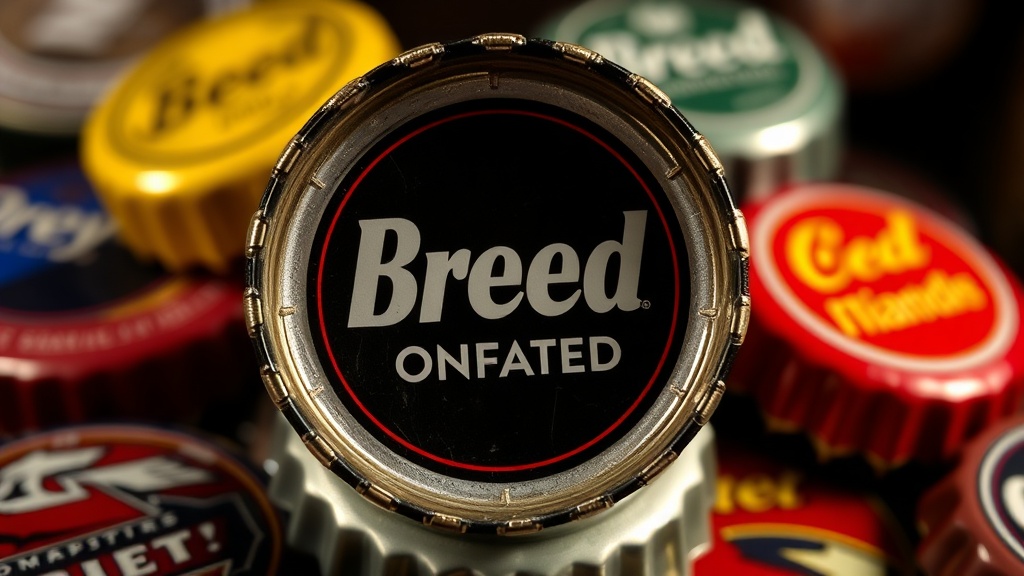
How to Grade Beer Cap Condition Like a Serious Collector

This guide breaks down a practical system for evaluating beer cap condition — from mint state pieces worth preserving to common caps best used for trading or craft projects. You'll learn the specific markers that separate a $20 cap from a $2 cap, how lighting affects your assessment, and why most beginners overrate their finds by at least one grade.
What Condition Terms Actually Mean in Practice
Every collector eventually faces the same problem: two caps look identical until you don't. The collecting world borrows heavily from coin grading, but beer caps have their own quirks — sharp edges that bend, cork liners that crumble, and graphics that flake off with barely any provocation.
Here's the reality: condition grading isn't about perfection. It's about communication. When you tell another collector you've got something "near mint," they should picture roughly the same cap you do. Consistency matters more than your personal standards being strict or lenient.
The standard breakdown most serious collectors use runs from Mint State (MS) down through About Uncirculated (AU), Extremely Fine (XF), Very Fine (VF), Fine (F), and finally Poor. Some people add plus and minus signs; some use numerical scales out of 70 like coins. For beer caps, the five-tier system works fine — extra gradations just start arguments.
Mint State means the cap left the brewery, got sealed on a bottle, and came off without anyone touching the top. No scratches from prying. No fingerprints. No fading from sitting in a sunlit cooler. You'll rarely see true MS caps in the wild — they mostly come from sealed cases or promotional sets that never touched liquid.
About Uncirculated allows for the slightest handling marks. Maybe a fingerprint that wipes off. Maybe the tiniest edge nick from the opener catching wrong. The graphics remain fully intact, the metal shows original luster, and you'd be proud to display it prominently.
Where Should You Check for Hidden Damage?
The top surface gets all the attention, but smart collectors flip every cap immediately. The underside tells stories the pretty side hides.
Start with the cork or plastic liner. Old cork liners absorb moisture, expand, and push against the metal shell — creating hairline cracks in the crimped edge that aren't visible from above. Gently flex the cap (just slightly) and watch for separation between the liner and metal. If it moves independently, the bond's failing.
Check the crimped edge under magnification. Even 5x reveals dings, corrosion spots, and bent flanges that naked-eye assessments miss. Run your finger around the edge (carefully — these things are sharp) and feel for irregularities. Uniform crimping indicates clean removal; wavy or flattened sections mean someone pried aggressively.
The top graphic needs angled light. Hold the cap under a single light source and tilt it slowly. Surface scratches catch light differently than the surrounding metal. Look specifically for what collectors call "slide marks" — parallel scratches from the bottle opener sliding across the cap before engaging the edge. These drag across the artwork and can't be buffed out without destroying the finish.
Finally, inspect for corrosion. Small spots near the edge often indicate the cap sat in moisture. White powdery residue suggests aluminum oxidation; reddish-brown means steel rust. Both spread if untreated, so know what you're buying.
Why Do Lighting Conditions Change Your Grade?
This trips up everyone. That cap looked pristine under warm kitchen lights — then you photographed it for a trade and suddenly noticed scratches everywhere. What happened?
Diffuse overhead lighting (like most ceiling fixtures) fills surface scratches with shadow, making them disappear. Directional lighting — sunlight, desk lamps, camera flashes — rakes across imperfections and highlights every flaw. Professional graders use consistent, angled LED setups specifically to eliminate this variable.
For your own collection, standardize your process. I use a simple foldable light tent with two daylight-balanced LEDs at 45-degree angles. It costs maybe $40 and removes the guesswork. Every cap gets photographed the same way, so condition assessments stay consistent whether I'm looking at noon or midnight.
When buying from others, ask for photos in different lighting. A seller using only flash photography might be hiding something — or genuinely unaware of surface wear. Multiple angles and light sources reveal the truth.
Common Grading Mistakes to Avoid
- Grade inflation: Your cap isn't "mint" because it looks nice. Mint means untouched. Most circulated caps max out at AU regardless of how well they were preserved.
- Ignoring the liner: A gorgeous top with a crumbling cork liner grades as "Fine" at best. The liner is part of the cap.
- Cleaning damage: That "mint" cap you scrubbed with brasso? You just introduced micro-scratches across the entire surface. Cleaned caps drop at least one grade automatically.
- Photography tricks: Soft focus, heavy filters, or low resolution hide flaws. Always examine caps in person before major purchases when possible.
How Should You Document Grades in Your Collection?
Once you start grading seriously, you'll want records. Memory fails — especially when you're handling dozens of similar caps.
I use a simple spreadsheet: brewery, beer name, year (if known), condition grade, acquisition date, source, and notes. The notes column matters most. "Small edge ding at 3 o'clock" tells me exactly what I graded down for. Six months later, when I'm considering a trade, I know whether that ding matters for the other collector's purposes.
Some people photograph every cap individually and keep digital records. That's ideal but time-consuming. At minimum, separate your storage by grade. Keep MS and AU caps in individual archival sleeves. Group VF and below in labeled boxes by region or brewery. You'll handle the valuable ones less frequently — and handling is where damage happens.
For insurance or estate planning purposes, consider third-party grading services. PCGS and NGC dominate coin grading, and both have experimented with bottle cap encapsulation. The service isn't cheap — often $15-25 per cap plus shipping — but for genuinely rare pieces, authenticated grading protects value and eliminates disputes.
Building Your Eye Takes Time
You won't develop consistent grading skills overnight. Handle as many caps as possible — especially high-grade examples. Visit shows, join Brewery Collectibles Club of America events, and ask experienced collectors to explain why they grade something a particular way. Most will oblige — we were all beginners once.
Start conservative. It's easier to upgrade a cap's grade after closer inspection than to explain why you overrated something in a trade. Reputation matters in this hobby, and "that guy who grades everything mint" becomes known quickly — and not favorably.
The goal isn't perfection. It's honesty — with yourself and with fellow collectors. A accurately graded Very Fine cap builds more trust than a hopeful Almost Mint that arrives disappointing. Grade carefully, document thoroughly, and your collection's value — both monetary and social — will reflect the effort.