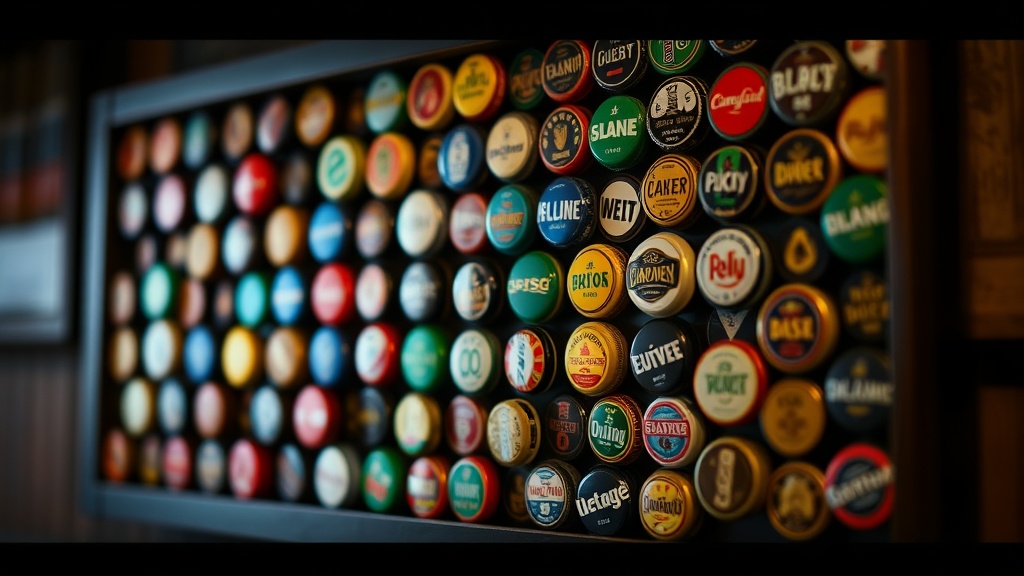
Creative Ways to Display Your Beer Cap Collection

This guide covers practical, creative methods for displaying beer cap collections—from shadow boxes and coffee tables to magnetic boards and DIY projects. Whether you've got fifty caps or five thousand, the right display transforms scattered bottle caps into a conversation piece that protects your collection while showing it off.
What Are the Best Ways to Display Beer Bottle Caps?
The best display method depends on collection size, available space, and how often you want to access or rearrange your caps. Small collections shine in shadow boxes and picture frames. Growing collections need expandable solutions like magnetic boards or custom tables. Serious collectors with thousands of caps often turn to ceiling tiles, wall mosaics, or dedicated display rooms.
Here's the thing—most collectors start with a jar. It's fine at first. But after a few dozen brewery visits and trading sessions, that mason jar becomes a graveyard where cool caps disappear. You can't see the Belgian tripel cap from that Brussels trip. The limited edition IPA release? Buried at the bottom.
Display isn't just about aesthetics (though that's part of it). Proper display protects caps from moisture, oxidation, and the kind of wear that ruins a mint-condition find. A cap stuck in a coffee tin for three years develops surface damage you can't reverse.
How Do You Display Beer Caps in a Shadow Box?
Shadow boxes offer the cleanest, most gallery-like presentation for beer cap collections. These framed, deep-set displays keep caps visible, protected behind glass, and arranged exactly how you want them.
The Lawrence Frames Shadow Box (available in 12x12 and 16x20 sizes) works well for themed collections—perhaps caps from a single trip, one brewery, or a specific style like sours or stouts. The depth accommodates standard crown caps without crushing them, and the hinged front lets you rearrange without disassembling the whole frame.
For a more polished look, the MCS Industries Deep Shadow Box comes in walnut and black finishes that complement most home decor. Worth noting: you'll want foam board or cork backing—not cardboard, which acids can damage over time.
Arrangement matters. Some collectors organize chronologically, others by color gradients (the ombré effect looks stunning), and others by geography. The Brewery Collectibles Club of America recommends documenting your arrangement method—future you will thank present you when the collection grows and you need to remember what goes where.
The catch? Shadow boxes limit you to a fixed number of caps. Once full, you're buying another frame or culling your display. That said, this constraint forces curation—you show only the best, most meaningful pieces.
Can You Make Furniture That Displays Beer Bottle Caps?
Yes—and it's more straightforward than most collectors expect. Epoxy resin tables, bar tops, and even flooring can encase thousands of caps permanently under a clear, durable surface.
The process typically involves arranging caps face-up in a plywood mold, then pouring clear epoxy resin in layers. Each layer cures for 24-48 hours before the next pour. The result? A functional surface where every cap remains visible, protected from UV damage (if you use quality resin), and completely sealed against spills.
TotalBoat Epoxy Resin and ProMarine Supplies Crystal Clear Bar Top Epoxy are commonly used by DIY collectors. Both self-level and resist yellowing better than hardware store alternatives. You'll need roughly 1-2 gallons of mixed resin per square foot of table surface, depending on cap density.
Pre-made options exist too. Bottle Cap Co. sells resin-topped side tables and wall panels sized specifically for crown cap collections. Their "Collector's Table" holds approximately 400 caps in a 24-inch diameter surface—perfect for a curated selection rather than an entire hoard.
Tables aren't the only furniture option. Collectors have built:
- Headboards with resin-embedded cap insets
- Bar backs with grid systems for rotating displays
- Coffee tables with removable glass tops (swap caps seasonally)
- Stair risers—each step showcasing a different brewery or region
Here's the thing about furniture displays: they're permanent. Once that cap is encased in epoxy, it's not coming out without destroying the piece. Choose caps you're certain about. Many builders create "sacrificial" duplicates—common caps they don't mind losing—to test arrangements before committing rare pieces.
What About Magnetic Boards for Beer Cap Displays?
Magnetic boards offer the most flexible display system for active collectors who constantly acquire new caps. Unlike fixed frames or resin pieces, magnetic displays let you rearrange, swap, and reorganize without tools or commitment.
Standard crown caps contain steel (the liner is typically tinplate or aluminum, but the shell is magnetic steel). This means they stick to magnetic surfaces without modification. The WallPops Dry-Erase Magnetic Board comes in 24x36 inch sizes—enough for several hundred caps arranged in tight rows.
For a more industrial look, galvanized steel sheets from home improvement stores work beautifully. Home Depot and Lowe's both sell 24x48 inch steel panels for under $30. Mount them with French cleats or heavy-duty picture hangers. The raw metal aesthetic fits brewery taproom vibes—appropriate for a collection built from craft beer exploration.
| Display Method | Capacity | Cost Range | Best For | Pros | Cons |
|---|---|---|---|---|---|
| Shadow Box | 20-100 caps | $25-$75 | Curated favorites, gifts | Protected, professional look | Fixed capacity, wall space needed |
| Magnetic Board | 200-500 caps | $30-$100 | Active collectors, frequent rearrangers | Flexible, expandable, no damage to caps | Caps can fall if bumped, dust accumulation |
| Resin Table/Bar Top | 400-2000+ caps | $150-$800+ | Permanent installations, large collections | Functional furniture, total protection | Permanent, requires skill or professional help |
| Ceiling Tiles | 100-300 per tile | $5-$15 per tile | Maximum coverage, basement bars | Uses overhead space, dramatic effect | Dusty, hard to access, not for daily viewing |
| Glass Jars/Vases | 50-500 caps | $10-$40 | Temporary storage, color sorting | Cheap, immediate, portable | Caps invisible inside, no organization |
That said, magnetic boards have limits. Caps can slide if the board isn't perfectly level. Strong magnets near electronics cause problems—don't mount these behind your TV or computer. And dust settles on exposed caps, requiring occasional cleaning with compressed air or a soft brush.
Are There Creative DIY Projects for Beer Cap Displays?
Absolutely. Some of the most impressive collections live in handmade pieces that cost little but mean everything.
Map projects rank among the most popular. Collectors glue caps onto wooden state or country outlines—each cap representing a brewery from that location. A USA-shaped board might hold 200+ caps across fifty states. Etsy sellers like CapMaps sell laser-cut plywood outlines, or you can trace and cut your own with a jigsaw.
Clocks make functional displays. A 12-inch clock face holds 12-24 caps as hour markers. Klockit sells clock mechanism kits for under $15. The "12 O'Clock" position might feature a particularly rare cap—the whale of your collection.
Wind chimes (yes, really) create auditory displays. Punch holes in caps, string them on fishing line with beads, and hang from a wooden circle. They tinkle in the breeze. The sound is subtle—more clink than chime—but unmistakable to fellow collectors. Perfect for covered patios where indoor displays won't work.
Coasters and trivets serve double duty. Arrange 6-9 caps in a hexagon or square, bind with epoxy or solder rings, and add cork backing. You use coasters daily; why not make them from your collection? The Craft Beer Association features several collector spotlight stories where members built entire kitchen trivet sets from regional brewery caps.
Worth noting: DIY projects often damage caps. Gluing, drilling, or soldering destroys the cap's original condition. Use common duplicates for these projects. That Westvleteren XII cap? Keep it in a archival flip, not glued to a clock.
How Should You Protect Valuable Caps While Displaying Them?
Display and preservation sometimes conflict. UV light fades colors. Moisture causes rust. Handling creates wear. Serious collectors employ several protection strategies.
Archival sleeves (2x2 inch Mylar flips) let you display caps in binders or frames while sealing out air and moisture. BCW Supplies sells these in packs of 100 for under $10. They're the same sleeves coin collectors use—proven archival quality.
For open displays, UV-resistant acrylic or glass prevents fading. Regular glass blocks some UV; museum-grade glass blocks 99%. The difference matters for caps displayed in sunlit rooms. Tru Vue Museum Glass costs more but preserves colors for decades rather than years.
Humidity control keeps steel caps from rusting. DampRid containers or silica gel packets in display cases absorb moisture. In humid climates (looking at you, Florida and Louisiana collectors), this isn't optional—it's necessary.
Rotation helps too. Display your best 100 caps for a few months, then swap in another batch. The stored caps stay pristine in archival boxes. BCW Storage Boxes hold thousands of caps in organized rows, protected from light, dust, and air.
The BeerAdvocate community forums have extensive threads on long-term cap preservation—worth browsing before committing rare pieces to permanent displays.
Here's the thing about protection: it can feel obsessive. Archival sleeves in climate-controlled boxes? For bottle caps? But here's the reality—some of these caps represent moments, trips, friendships, discoveries. That cap from the brewery where you met your partner? That limited release you stood in line two hours for? Preservation isn't paranoia. It's respect for the stories these small metal disks carry.
Display your collection however speaks to you. Shadow box or epoxy table, magnetic board or ceiling mosaic. The right method is the one that gets your caps out of that jar and into view—where they belong.