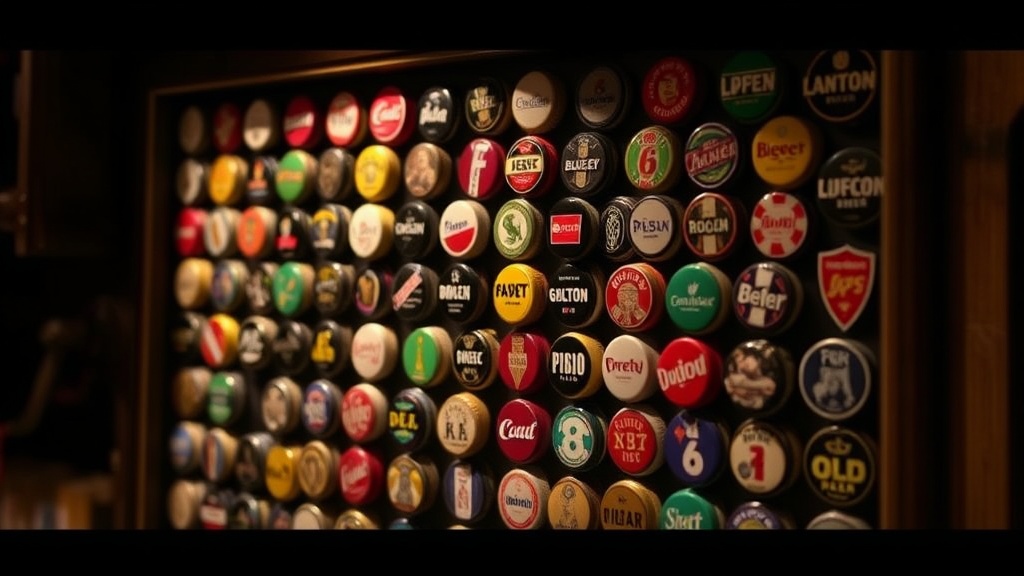
5 Creative Ways to Display Your Beer Bottle Cap Collection

DIY Bottle Cap Coffee Table
Magnetic Beer Cap Wall Map
Custom Shadow Box Frames
Bottle Cap Bar Sign Backdrop
Resin-Coated Serving Tray
You've spent months — maybe years — prying caps off craft IPAs, vintage lagers, and road-trip souvenirs. Now those tiny metal discs are sitting in jars, shoeboxes, or scattered across a desk drawer. This post covers five creative, practical ways to turn a beer bottle cap collection into wall art, furniture accents, and conversation pieces. Whether you've got fifty caps or five thousand, these display methods protect the condition, show off the designs, and keep the collection organized. Here's how to give those caps the spotlight they deserve.
How Do You Display a Beer Bottle Cap Collection Without Damaging the Caps?
The best displays keep caps flat, dry, and out of direct sunlight. Moisture causes rust. UV light fades ink. And bending or stacking caps risks dents that tank resale value. Most collectors want a solution that's accessible — something guests can look at without handling the goods.
Shadow boxes and deep-set frames are the go-to starting point. They keep dust out, allow easy rearrangement, and look sharp on a wall. The IKEA RIBBA frame (9x9 inches, about $10) has a shadow-box depth of about one inch — perfect for standard crown caps. For larger collections, Michaels sells 12x12 and 16x20 shadow boxes under the Studio Décor brand. These come with linen backs and push-pin mounts, so you can position each cap exactly where you want it without glue.
That said, glue isn't always the enemy. A thin bead of hot glue on the back rim of a cap will hold it firmly to a backing board without visible damage. (Avoid superglue — it can seep under the rim and discolor the metal.) If you want zero adhesives, magnetic sheet backing works wonders. Cut a sheet of Magnetic Vent Cover from Home Depot to fit the frame, drop the caps on, and they'll stay put. Rearranging takes seconds.
Worth noting: caps with cork or plastic liners can warp in humid rooms like basements or bathrooms. Stick to climate-controlled living spaces.
What Can You Make With Bottle Caps Besides a Collage?
Bottle cap maps, resin-topped furniture, magnetic strip galleries, and custom serving trays are all popular projects that go well beyond a flat collage. These builds turn the collection into functional decor.
1. State and Country Bottle Cap Maps
A wooden cutout of Texas, California, or the entire United States — drilled with holes sized for crown caps — is one of the most eye-catching displays on the market. Beer Cap Maps (beercapmaps.com) sells laser-cut birch maps with pre-drilled holes for about $35 to $75 depending on size. Each hole grips a cap by the rim, so nothing gets bent, glued, or scratched. You can pull caps out and swap them whenever a new favorite enters the rotation.
The maps come unpainted. Most collectors stain the wood with Minwax Dark Walnut or leave it raw for a Scandinavian look. Mounting is simple — a single French cleat or two sawtooth hangers on the back. A USA map holds roughly 70 to 80 caps. A single state like Ohio or New York holds 25 to 40. That makes this option ideal for mid-size collections that haven't hit hoarder status yet.
2. Resin-Top Coffee Tables and Bar Carts
For the DIY-minded collector with a garage and patience, a resin-pour table is hard to beat. The concept is straightforward: arrange caps in a single layer inside a wooden tray or tabletop mold, then pour clear epoxy resin over the top until they're sealed beneath a glass-smooth surface.
ArtResin is the brand most crafters reach for — it's UV-stable, self-leveling, and cures without yellowing. A gallon kit runs about $85 and covers roughly 15 to 20 square feet at an eighth-inch depth. The trick is pouring in thin layers. Thick pours generate heat, bubble up, and can warp the caps. Three coats of roughly one-sixteenth inch each is the safer play.
The catch? Once those caps are in resin, they're permanent. This method works best for common caps you don't plan to trade or sell. A few collectors build a "sacrificial" set of duplicates specifically for resin projects — that way the mint-condition rarities stay in sleeves.
3. Magnetic Strip Wall Galleries
Magnetic knife strips aren't just for kitchens. Mount three or four IKEA KUNGSFORS magnetic racks (about $15 each) in a grid on an office wall, and you've got an instant, modular cap gallery. Crown caps cling tightly to the steel surface, and the vertical layout turns even a small collection into bold graphic art.
This method shines for people who rotate caps seasonally — Oktoberfest designs in fall, summer wheat labels in July. No tools needed to swap them out. Just peel and replace. The strips hold about eight to ten caps per foot, so a six-foot span accommodates fifty to sixty caps comfortably.
Here's a quick comparison of the first three methods:
| Display Method | Best For | Cost Estimate | Reversible? |
|---|---|---|---|
| Shadow Box Frames | Small to medium collections | $10 – $40 | Yes |
| Bottle Cap Map | Themed regional sets | $35 – $75 | Yes |
| Resin Tabletop | Permanent art pieces | $85 – $200 | No |
| Magnetic Strips | Frequent rotation | $15 – $60 | Yes |
4. Custom Framed Mosaic Art
Some collectors treat caps like tiles. Arranged by color, brewery, or region, they become pixel-like mosaics. A 20x30 inch frame can hold 200 to 250 caps in a tight grid. The finished piece looks like vintage pop art — especially when you mix neon craft brewery caps with faded gold imports.
The practical approach is to build a shallow grid on foam core board. Score half-inch channels in a checkerboard pattern, then press each cap into its square. A dab of glue on the back rim keeps everything aligned. For a cleaner finish, have a custom mat cut at a frame shop — the mat window sits flush with the cap tops, hiding the backing and giving the piece a museum-quality look.
Framebridge and Artifact Uprising both offer deep-set custom framing online. Prices start around $80 for a 16x20 inch piece. Local frame shops often beat that by $20 or $30, and they'll let you bring the caps in for a test fit before committing.
5. Serving Trays and Bar-Top Coasters
Smaller collections — or duplicate caps — find a home in resin-coated serving trays and tile coasters. Michael's sells unfinished wooden trays for about $8. Arrange a dozen caps inside, pour a thin layer of epoxy, and you've got a functional piece for game nights. For coasters, ceramic tiles from Lowe's (about 50 cents each) plus felt pads on the bottom do the job. Glue the cap face-up, seal with clear polyurethane, and the coaster will survive condensation without rusting.
This approach is great for caps from specific events — wedding favors, brewery tours, or vacation souvenirs. A tray of Brooklyn Brewery caps, for example, makes a solid housewarming gift for a fellow collector.
Where Can You Buy Bottle Cap Display Frames and Supplies?
Specialty display frames, resin kits, and magnetic hardware are available online, at big-box craft stores, and through custom woodworkers on Etsy. Each source has trade-offs in price, shipping speed, and customization.
For ready-made maps and frames, Beer Cap Maps offers the widest selection of U.S. state and country shapes. Amazon carries knockoff versions for half the price, but the birch is thinner and the hole tolerances looser — caps may rattle or fall out. For serious collectors, the original brand is worth the upgrade.
Craft supplies are easy to source locally. Michaels, Hobby Lobby, and Jo-Ann carry shadow boxes, hot glue guns, and resin starter kits. Home Depot and Lowe's stock the magnetic strips, wood stains, and mounting hardware. If you're looking for archival-quality mat boards and UV-protective glass, a local frame shop or Framebridge online is the better bet.
Etsy is the wild card. Dozens of woodworkers sell custom cap displays — everything from guitar-shaped cutouts to logo replicas of the Chicago Cubs or Star Wars icons built from cap-sized holes. Prices range from $25 for small desk pieces to $300 for large wall installations. Read the reviews carefully. Some sellers use MDF instead of solid wood, which doesn't hold screws well and feels cheap.
How Do You Flatten Bottle Caps for Crafts?
Flattened caps work better for coasters, jewelry, and certain framed displays because they sit flush and don't catch on sleeves or glassware. The simplest method is a ball-peen hammer and a hard surface — but that leaves dimples and creases.
A cleaner approach uses a Harbor Freight 6-Ton A-Frame Shop Press (about $60 with coupon). Place the cap between two flat steel plates and press slowly. The cap flattens evenly without marring the paint. For smaller batches, a heavy-duty C-clamp and two pieces of scrap hardwood will do the job. Tighten the clamp a quarter-turn at a time. Too fast, and the cap buckles.
Here's the thing: once a cap is flattened, it loses most of its value to serious collectors. The crown shape is part of what defines the artifact. Only flatten duplicates, commons, or damaged caps. Never press a rare pre-Prohibition cap or a limited-release craft design — that's money and history you'll never get back.
"The best displays don't just store caps — they tell the story of where they've been, what was poured, and who shared the table."
Storage matters even after you've built a display. Keep a backup inventory in 2x2 cardboard coin flips or small plastic tubes (the kind sold for shotgun shell reloading). Label each cap with the brewery name, year, and source. That way, when you rotate the wall display or build a new resin piece, you'll know exactly what's available — and what's off-limits.
Light also plays a bigger role than most people expect. Even indirect daylight will fade red and blue inks over five to ten years. If a display sits near a window, consider UV-blocking glass or acrylic. Tru Vue Museum Glass blocks 99% of UV rays and cuts glare, though it adds $20 to $50 to a framing bill. Regular glass blocks about 45% — better than nothing, but not ideal for long-term preservation.
That said, not every cap needs museum treatment. A magnetic strip of everyday craft brewery finds in the kitchen is a low-stakes way to enjoy the hobby without overthinking conservation. The real danger is mixing high-value vintage pieces with those casual displays. Keep the 1930s Ballantine or the signed limited release in a sealed case, and let the weeknight IPA caps handle the daily wear.
At the end of the day, a beer bottle cap collection is only as good as the joy it brings — and the conversations it starts. Pick a display method that matches the size of the collection, the space you've got, and the time you're willing to spend building. Then crack open something new. There's always room for one more cap.